Setting up semantic routing
Define a class, check it separates, then name it in a rule.
Status: shipped, behind the classifier cargo feature and a
--classifier-model pointing at the model — the Docker image bakes one in and
sets it, so it works out of the box there.
Define a class with example prompts, then name it in a routing rule:
curl -X POST https://control/admin/prompt-classes -b "$SESSION" \
  -H 'content-type: application/json' \
  -d '{"name":"coding","min_margin":0.05,
       "examples":["Why does this Rust code fail the borrow checker?",
                   "My unit test throws NullPointerException on line 42."]}'
{ "position": 0, "class": "coding", "targets": ["claude-sonnet"] }
POST /admin/prompt-classes/evaluate reports, per class, leave-one-out
precision and recall over your own examples, the mean and worst margin, the
nearest other classes, the examples that were misclassified, and a verdict.
Two classes whose centroids sit above ~0.8 are one region with two names and no
threshold separates them — the report says so rather than leaving you to infer
it from four numbers.
Defining a class
Everything above is a screen, and Prompt classes is where a class begins. A name, a tier, and example prompts one per line — no training step and no model to fit. Create it, and the control plane averages the examples into a centroid on its next rebuild.
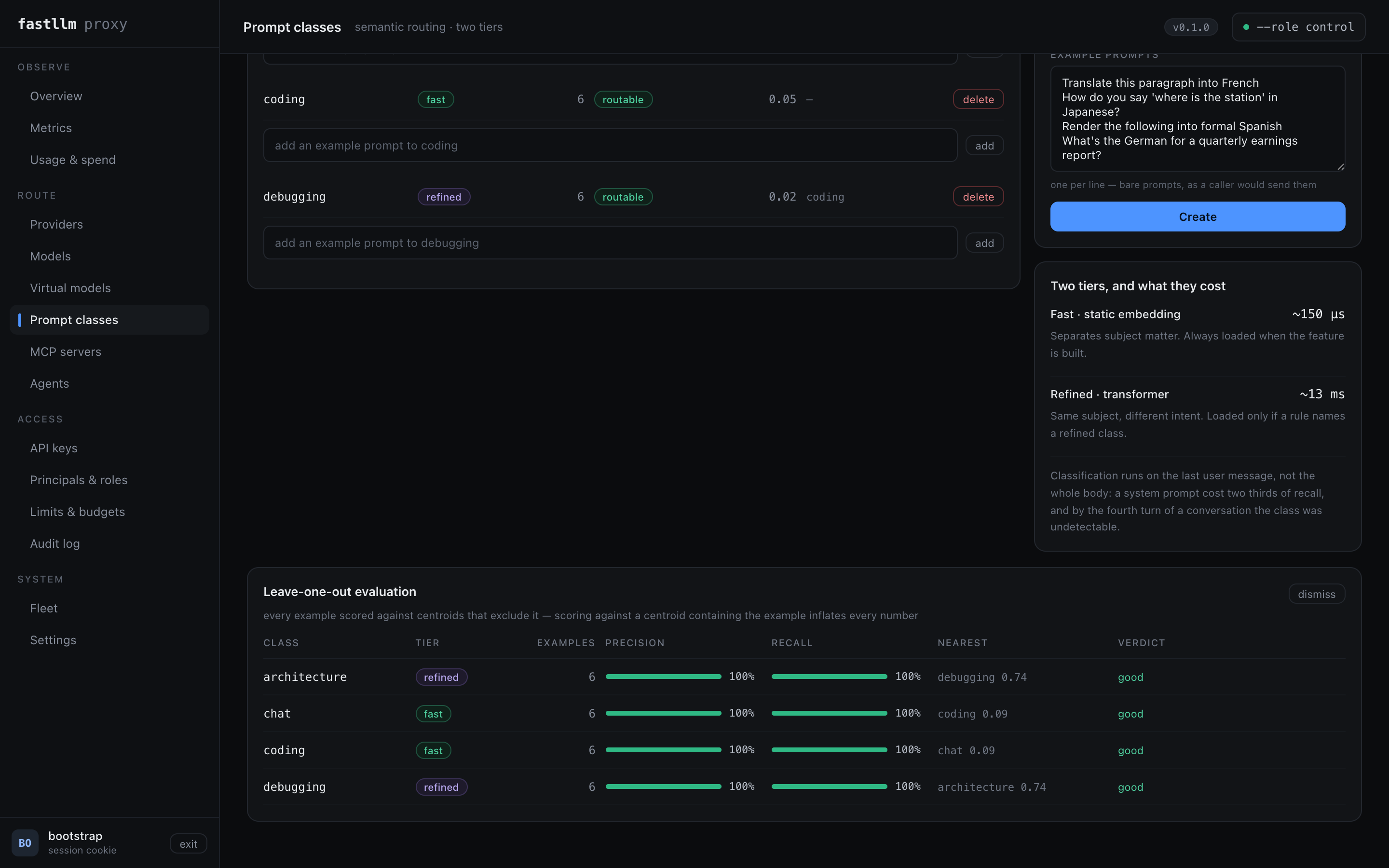
The tier selector is the decision worth pausing on, and the panel beside
the form states its price: fast costs ~150 µs and is always loaded; refined
costs ~13 ms and loads a transformer, but only if some rule actually names a
refined class. Choose fast unless you need to separate two things that share
a subject — debugging from coding, say — which is exactly what the refined
tier is for.
The table's routable column is the one that saves an afternoon. A class with examples but no centroid cannot match, so a rule naming it silently never fires — which looks identical to a rule that is simply not being hit. The screen calls it out rather than leaving you to infer it.
Check the classes before you route on them
Run evaluation scores every example against centroids that exclude it:
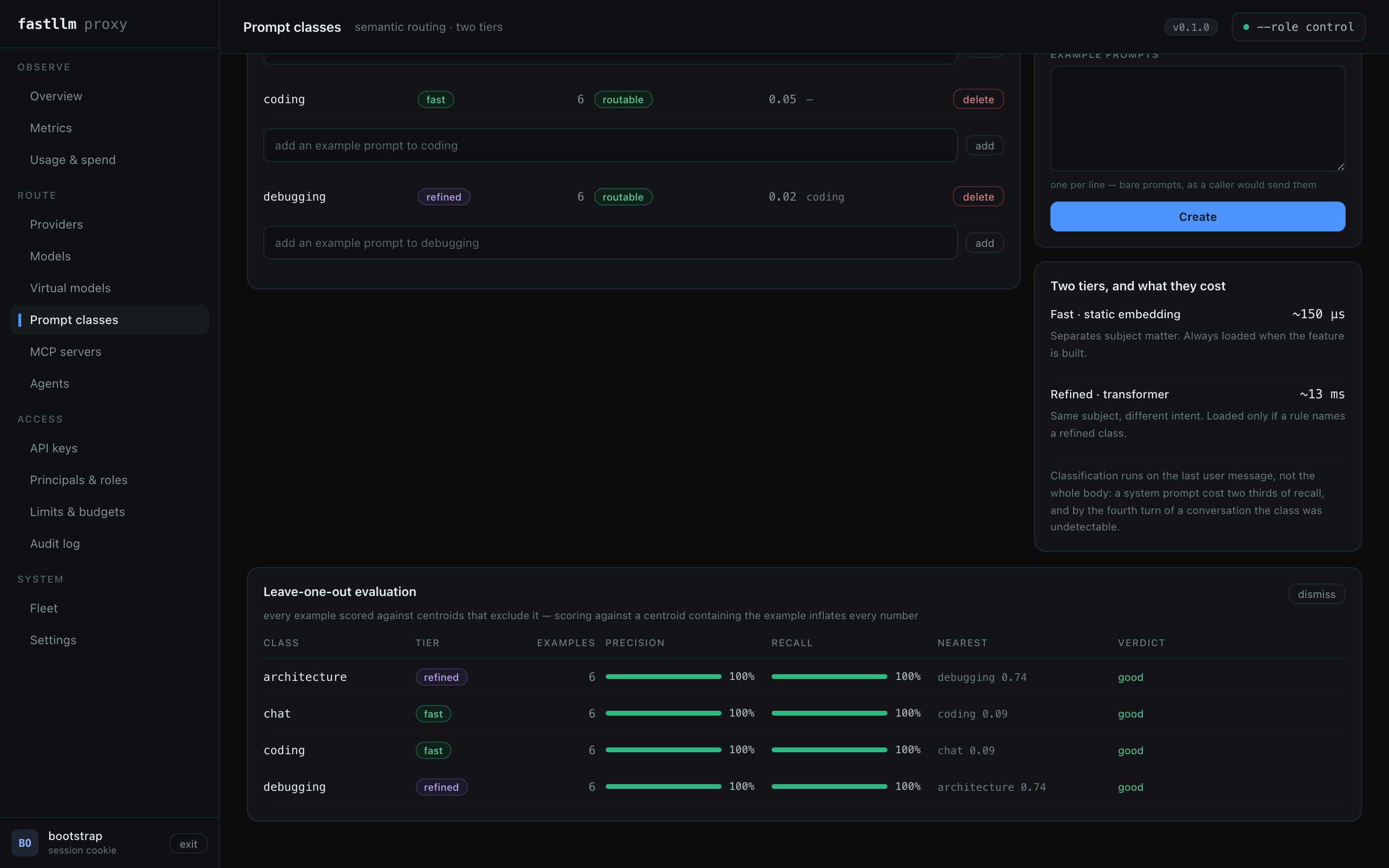
Per class: precision, recall, the nearest other class with its similarity, and
a verdict. Read the nearest column first. Two classes sitting above ~0.8
are one region with two names, and no threshold you pick will separate them —
the fix is different examples, not a different margin. Above, architecture
and debugging sit at 0.74 and still separate cleanly, because both are
refined classes doing exactly the job the refined tier exists for.
Overall accuracy is deliberately not the headline. A class that is a small share of your traffic can fail completely while accuracy barely moves — the base-rate trap that once hid a total classifier failure in this codebase.
Then name the class in a rule
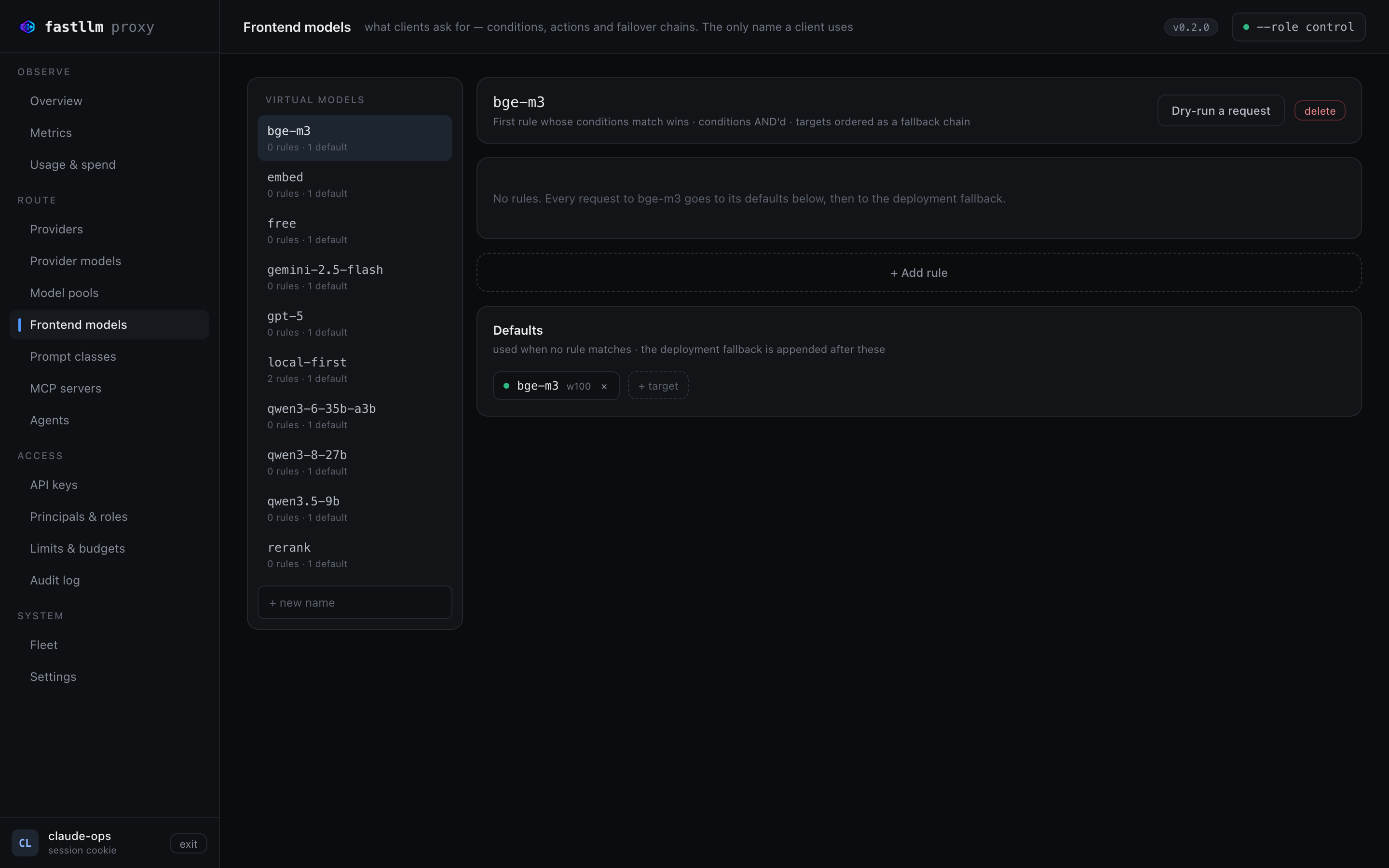
On Frontend models, a rule's condition can be a prompt class, and its targets are weighted and ordered. Dry-run answers which rule a given prompt would hit and what the chain resolves to, without dispatching anything — which is how you confirm the classifier and the rule agree before real traffic depends on it.
Where next
The measurements behind every choice above — which classes separate, what each tier costs in production, and what is deliberately not built — are in what the classifier actually costs.